April 6, 2026
Lifestyle vs White Background: Which Sells More?
This debate comes up constantly in ecommerce groups. Should you shoot on white or invest in lifestyle product photography? People get weirdly passionate about it. The real answer is boring but true: you need both. Let me explain why.
The Case for White Background Ecommerce Photos
White backgrounds aren't exciting. That's the point. They're clean, professional, and they put 100% of the focus on your product. No distractions.
Why sellers use them:
- Amazon requires them for main listing images — no exceptions
- They load fast and look consistent across your catalog
- Shoppers can see exactly what they're buying
- Easy to crop, resize, and reuse across platforms
- They make your store look polished and trustworthy
If you're selling on marketplaces, white backgrounds aren't optional. They're table stakes. A cluttered or colored background on your main image is one of the classic product photo mistakes that tanks click-through rates.
Where White Backgrounds Work Best
The problem? They're forgettable. A product floating in white space doesn't tell a story. It doesn't make someone stop scrolling. And it definitely doesn't help a buyer imagine owning your product.
White backgrounds work for comparison shopping — when someone already knows what they want and is evaluating options. But they don't create desire.
The Case for Lifestyle Product Photography
Lifestyle photos show your product in context. A watch on a wrist. A lamp on a bedside table. A protein powder next to a gym bag. They sell the feeling, not just the thing.
Why lifestyle photos convert:
- They help shoppers visualize ownership — "that could be my kitchen"
- They perform dramatically better on social media and ads
- They communicate scale, use case, and brand personality
- They create emotional connection, which drives impulse purchases
Most sellers find that lifestyle images outperform plain product shots in ad click-through rates and social engagement. If you're running Facebook or Instagram ads with white background photos, you're probably overpaying for conversions.
Where Lifestyle Photos Work Best
They're expensive to produce. You need a location (or a good set), props, sometimes models, and a photographer who understands styling. For a small store with 50+ SKUs, that's a serious budget hit.
They also don't work as main images on most marketplaces. And if the styling is off — wrong props, bad lighting, cluttered composition — they hurt more than they help.
For tips on doing this affordably, our AI product photography guide covers the modern approach.
So Which Actually Sells More?
Here's what the data says:
| Use Case | Winner | | ----------------------------- | ---------------- | | Amazon/marketplace main image | White background | | Social media ads | Lifestyle | | Product detail page gallery | Mix of both | | Email marketing | Lifestyle | | Google Shopping | White background | | Brand storytelling | Lifestyle |
The answer isn't one or the other. The highest-converting product listings use white backgrounds as the main image, then include 2-3 lifestyle shots in the gallery. You get the clean professionalism and the emotional pull.
The Real Problem: Producing Both Is Expensive
This is where most small sellers get stuck. Shooting white background photos is relatively straightforward — a lightbox and your phone can get you there. But lifestyle photography? That requires sets, props, styling, and either a photographer or serious Photoshop skills.
So sellers pick one. Usually white. And their social media suffers, their ads underperform, and their listings look identical to every competitor.
How Flyshot Gives You Both From One Photo
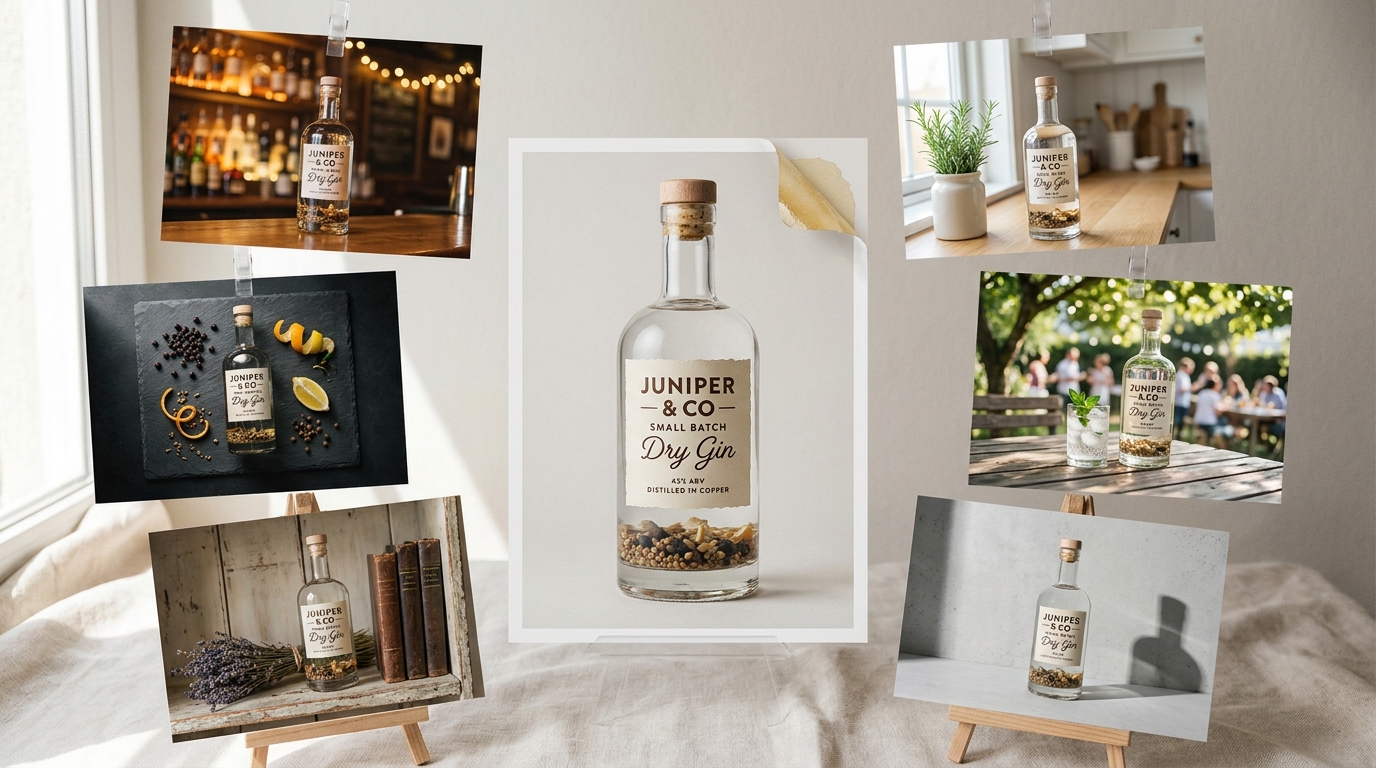
This is exactly the problem Flyshot was built to solve. Upload a single product photo — even one shot on your kitchen table — and the AI does two things:
- Removes the background cleanly
- Generates a new scene — lifestyle, studio, seasonal, whatever you pick
Same raw photo. Two completely different outputs. One for your Amazon listing, one for your Instagram ad. You don't need two photoshoots. You don't need Photoshop. You don't need a studio.
The cost? Credits start at a few cents per image depending on resolution. Check current pricing here.
A Practical Approach for Small Stores
If you're just getting started, here's what I'd recommend:
- Shoot clean raw photos of every product — good lighting, sharp focus, any background
- Use AI to remove backgrounds for your marketplace main images
- Generate 2-3 lifestyle variations per product for social and your gallery
- Keep your style consistent — pick a vibe and stick with it across your catalog. Flyshot's style presets make this easy — apply the same look to every product in one click.
- Test both in your ads and let the data tell you what your audience prefers
You don't have to choose between lifestyle and white background anymore. The tools have caught up. Use both, and let your competitors keep arguing about which one is "better." For more on this workflow, see how to get one product photo, endless lifestyle scenes.
Try generating both styles from a single photo in Flyshot's studio.