April 2, 2026
How to Photograph Handbags with AI
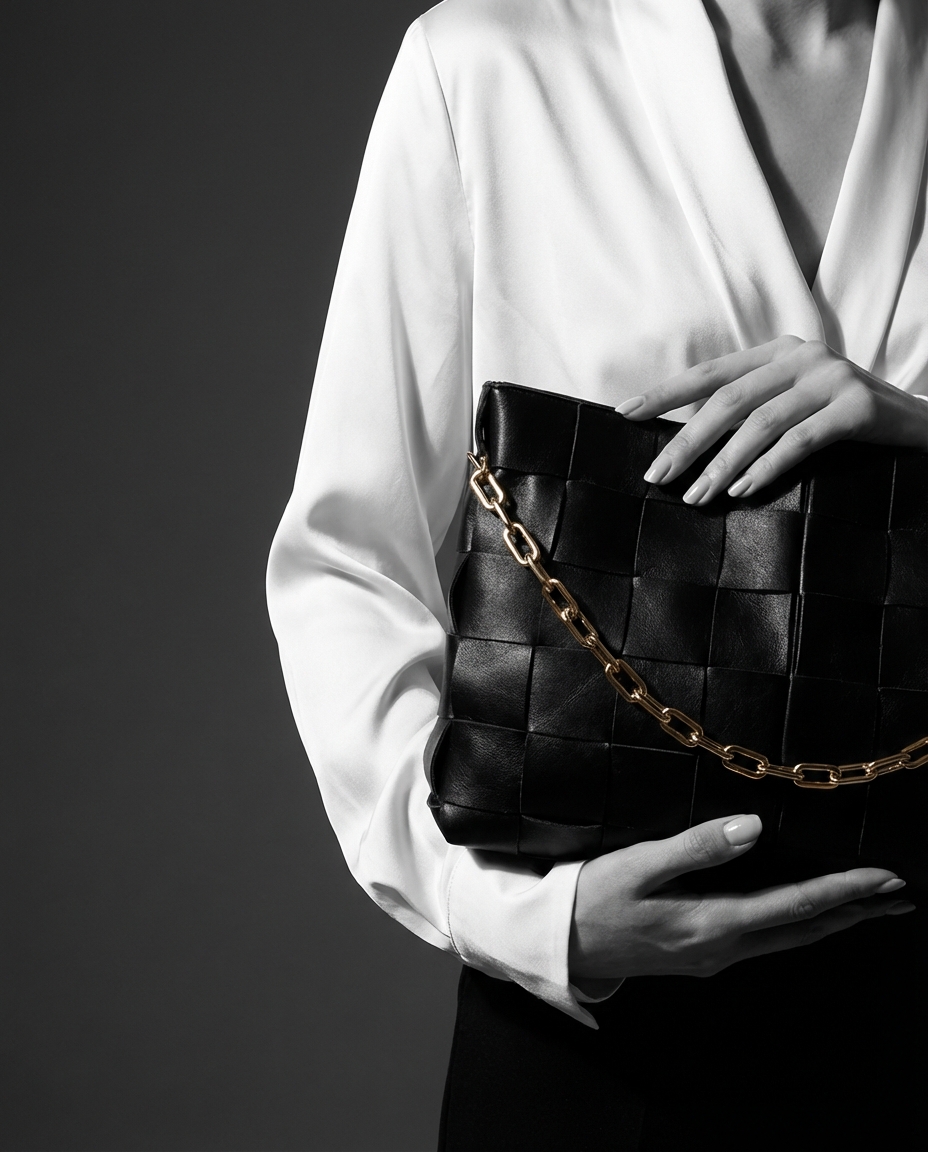
There's a reason luxury houses spend six figures on a single handbag campaign. A bag isn't just an accessory — it's architecture. It has structure, proportion, material tension, hardware that catches light in specific ways. When someone shops for a handbag online, they can't run their fingers across the leather or feel the weight of the chain strap. The photograph has to do all of that work. It has to communicate texture through a screen, convey quality through pixels, and make the viewer feel like they already own the thing. That's an enormous ask for a single image, and it's why handbag photography is one of the most demanding disciplines in e-commerce.
The gap between how a bag looks on your kitchen table and how it looks on the Celine website isn't just about the camera. It's about environment, lighting philosophy, and the kind of art direction that most independent brands simply can't afford. But that gap is closing fast, and AI product photography is the reason why.
Why Handbag Photography Is Uniquely Difficult
Most product categories have one or two photographic challenges. Jewelry is small and reflective. Clothing needs to show drape and fit. Handbags have everything. They're three-dimensional objects with complex geometry — gussets, flaps, pockets, closures — and every angle tells a different story. Shoot from the front and you lose the depth of the silhouette. Shoot from the side and you miss the face of the hardware. Shoot from above and the bag collapses into a flat shape that communicates nothing about how it actually looks when carried.
Then there's the material problem. Leather — real or vegan — has a surface that changes dramatically depending on how light hits it. Pebbled grain needs raking side light to show texture. Smooth calfskin needs soft, even illumination or it turns into a mirror that reflects your entire studio setup. Suede absorbs light and can look flat and lifeless without careful fill. Patent leather is essentially a funhouse mirror. Each material demands a different lighting approach, and if you're selling bags in multiple finishes, you're essentially reshooting from scratch every time.
Hardware is the other headache. Zippers, clasps, chain straps, and logo plates are small, highly reflective metal surfaces sitting right next to large matte leather panels. Exposing correctly for both in a single frame requires either very controlled studio lighting or significant post-production work. The gold chain link strap on a black leather bag is a classic nightmare scenario — the chain blows out to white while the leather goes muddy dark, or you expose for the chain and the leather loses all its detail.
What Luxury Brands Actually Do
If you've ever wondered why a Coach or Bottega Veneta product page looks the way it does, the answer is layers — layers of light, layers of post-production, and layers of art direction. A typical luxury handbag shoot involves a dedicated still-life photographer, a digital tech monitoring capture on a calibrated screen, and a stylist whose job is to stuff the bag with tissue paper so it holds its shape perfectly.
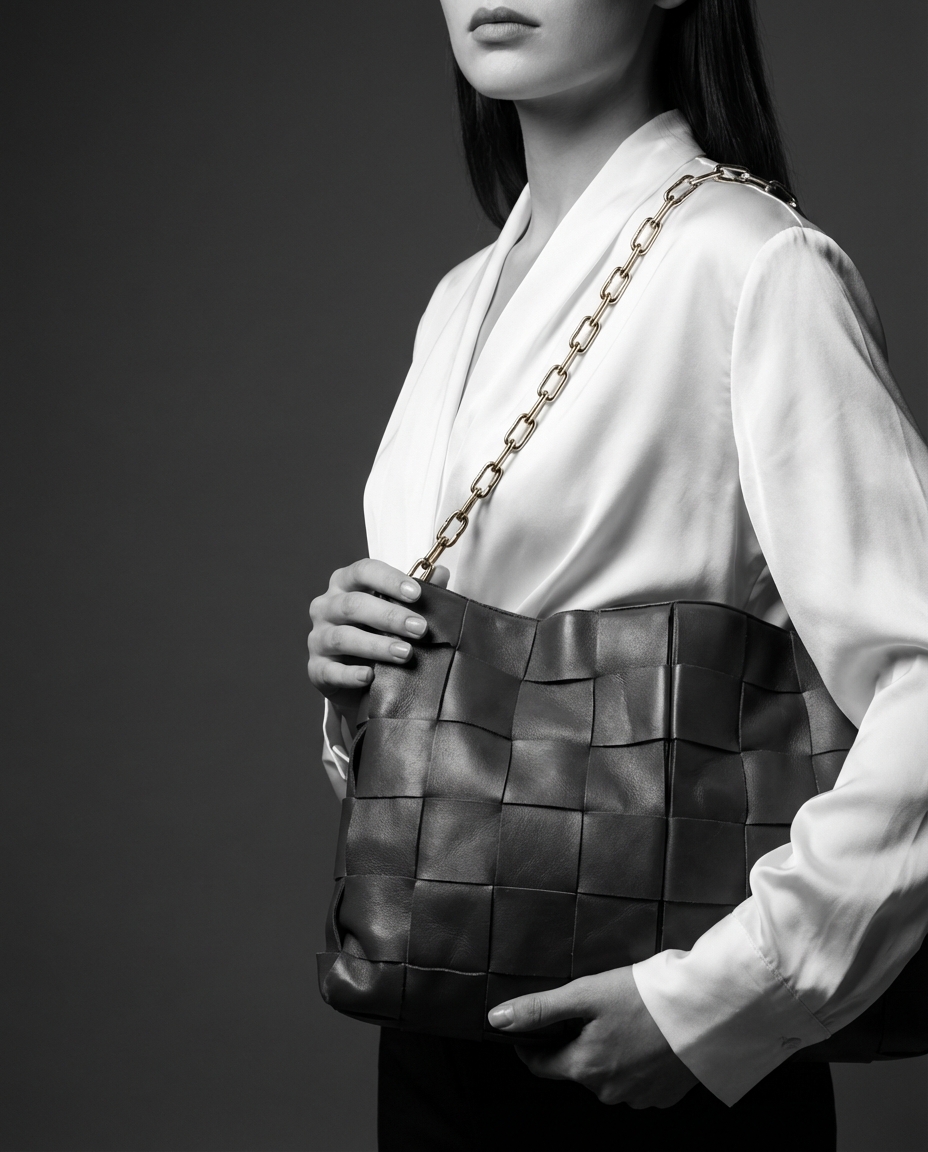
The lighting setup alone can take hours. Most high-end bag photography uses a large overhead softbox for general fill, smaller accent lights for hardware details, and black flags to add edge definition — that subtle dark line separating the bag from the background that makes a product shot look three-dimensional instead of flat.
The backgrounds matter too. Luxury brands use textured surfaces — raw linen, polished marble, brushed concrete — that complement the bag's material without competing with it. They shoot lifestyle scenes where the bag is clearly the star but the environment tells a story about who carries it. That environmental storytelling is what turns a product photo into a brand image.
The Texture and Scale Problem for Independent Brands
For smaller brands and independent designers, the challenge isn't just replicating the lighting — it's communicating the physical qualities of the bag through a screen. Texture is the big one. A customer scrolling through your Shopify store needs to feel the leather through the image. If your photo flattens the grain or washes out the surface detail, the bag looks cheap regardless of how well it's actually made. This is especially true for artisan and handcrafted bags where the material quality is the entire selling proposition.
Scale is the other silent killer. Without context, a clutch and a tote can look identical in a product photo. Luxury brands solve this with model shots — a bag slung over a shoulder or held in hand immediately communicates its size relative to a human body. But model photography adds another layer of cost and complexity that puts it out of reach for many brands. Some sellers try to solve this with flat-lay shots next to everyday objects, but that approach rarely looks premium enough for accessories that are supposed to feel aspirational.
The result is a visual credibility gap. Your bag might be beautifully made from the finest materials, but if the photography doesn't communicate that, customers will scroll right past it. They've been trained by years of luxury brand imagery to associate certain visual cues — dramatic lighting, rich textures, editorial environments — with quality. If your photos don't hit those cues, you're fighting an uphill battle on every listing.
How AI Handbag Photography Bridges the Gap
This is where the game has genuinely changed. The raw capture — getting a sharp, well-lit photo of your bag — is something you can absolutely do yourself with a decent camera or even a modern smartphone. The techniques aren't secret: use diffused natural light or a softbox, stuff the bag so it holds its shape, shoot at a slight angle to show dimension, and get close enough to capture material detail. Our phone photography guide covers the fundamentals if you're starting from scratch.
What used to be impossible without a professional studio was everything around the bag — the environment, the mood, the editorial context that makes a product shot feel like a campaign image. That's exactly what AI handles. Upload your clean product shot to Flyshot's studio, and the AI removes the background and generates the kind of styled scene that would normally require a set designer, a prop stylist, and a half-day studio rental. Marble surfaces, lifestyle contexts, moody editorial lighting — steer the AI toward the environments that make handbag photography feel aspirational rather than transactional.
The AI understands material context in a way that matters for accessories specifically. It doesn't just drop your bag onto a generic background — it generates environments that complement the bag's material and color. A warm-toned leather tote gets placed in a setting that enhances those warm tones. A sleek black clutch with gold hardware gets the kind of dramatic, high-contrast treatment you'd see in a magazine spread. The result is imagery that communicates the same quality cues as luxury brand photography, without the luxury brand budget.
Getting the Raw Shot Right
AI can transform the environment, but it needs a solid foundation to work with. For handbags specifically, there are a few things that matter more than they do for other product categories. First, stuff the bag properly. An empty bag sags, wrinkles, and loses its intended silhouette. Use tissue paper, bubble wrap, or a bag shaper to fill it out so it looks the way it would on a shelf in a boutique. This is the single most impactful thing you can do before you even pick up the camera.
Second, pay attention to the hardware. Make sure clasps are closed, zippers are positioned consistently, and chain straps are arranged deliberately rather than just draped randomly. The hardware is often the most eye-catching element in the photo, and sloppy hardware positioning reads as sloppy brand. Clean every metal surface with a microfiber cloth right before shooting — fingerprints that are invisible to your eye will show up in the image, especially on gold-tone hardware.
Third, shoot more angles than you think you need. The front, the side profile, the back, the bottom, the interior, and at least one three-quarter angle that shows the bag's depth. For bags with interesting closures or unique details, get dedicated close-up shots of those features. Each of these angles can be run through AI scene generation separately, giving you a full editorial spread from a single shooting session. Check our guide on common product photo mistakes to avoid the pitfalls that trip up most sellers.
From Product Shot to Campaign Image
The real power of AI photography for handbags and accessories isn't just about making individual photos look better — it's about building a cohesive visual identity across your entire catalog. When every bag in your collection is photographed in complementary environments with consistent lighting moods, your brand starts to feel curated and intentional. That consistency is something luxury brands achieve through rigorous art direction, and it's something that style presets make achievable for smaller operations across dozens or hundreds of SKUs.
With Flyshot, you can generate multiple scene variations for each bag, test different visual directions, and build out a complete content library for your website, social media, and marketplace listings — all from the same set of raw product photos in your product catalog. The pricing is structured around credits, so you can scale your content production up or down based on what you need for a given launch or season. For brands that need to keep their Instagram feed looking fresh with new visual content, or maintain polished listings on Etsy, that flexibility is a significant advantage.
The handbag market is one of the most visually competitive categories in fashion e-commerce. Customers are comparing your imagery — consciously or not — against the brands they aspire to own. AI photography doesn't replace the craftsmanship that goes into making a beautiful bag, but it ensures that craftsmanship comes through in every image. The texture, the hardware, the proportions, the aspirational context — all of it, captured and presented at a level that used to require a budget most independent brands simply didn't have.