April 4, 2026
What Is AI Product Photography?
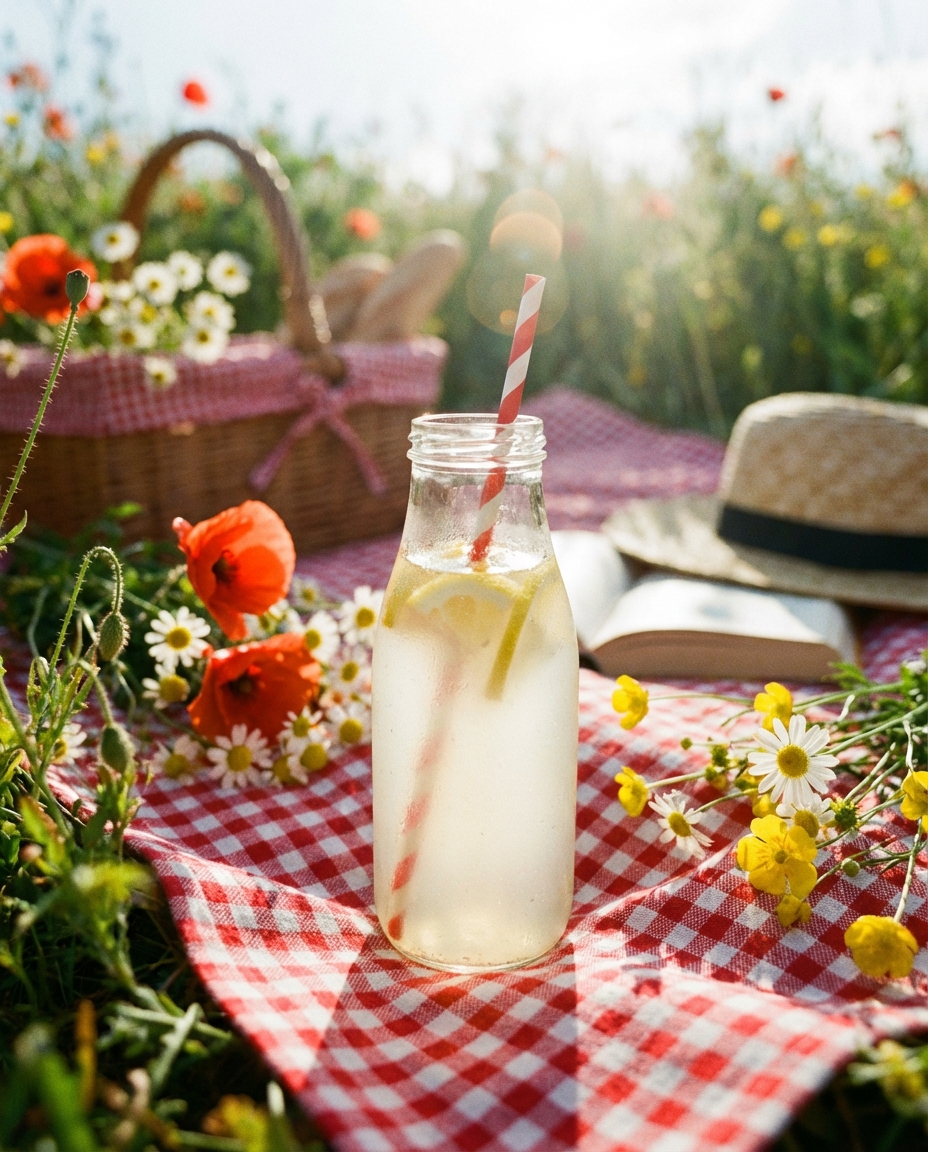
AI product photography is exactly what it sounds like: you give an AI a photo of your product, and it generates a professional-looking image — complete with backgrounds, lighting, and styling — without a physical photoshoot.
It's not a gimmick anymore. It's a real workflow that real sellers use to produce catalog and marketing images at a fraction of the traditional cost.
How AI Product Photography Works
The process is simpler than most people expect. There are typically three steps:
- Upload a product photo — This can be a basic shot taken on your phone. Clean lighting helps, but you don't need a studio setup.
- Background removal — AI automatically detects your product and strips the background. No manual masking or Photoshop work.
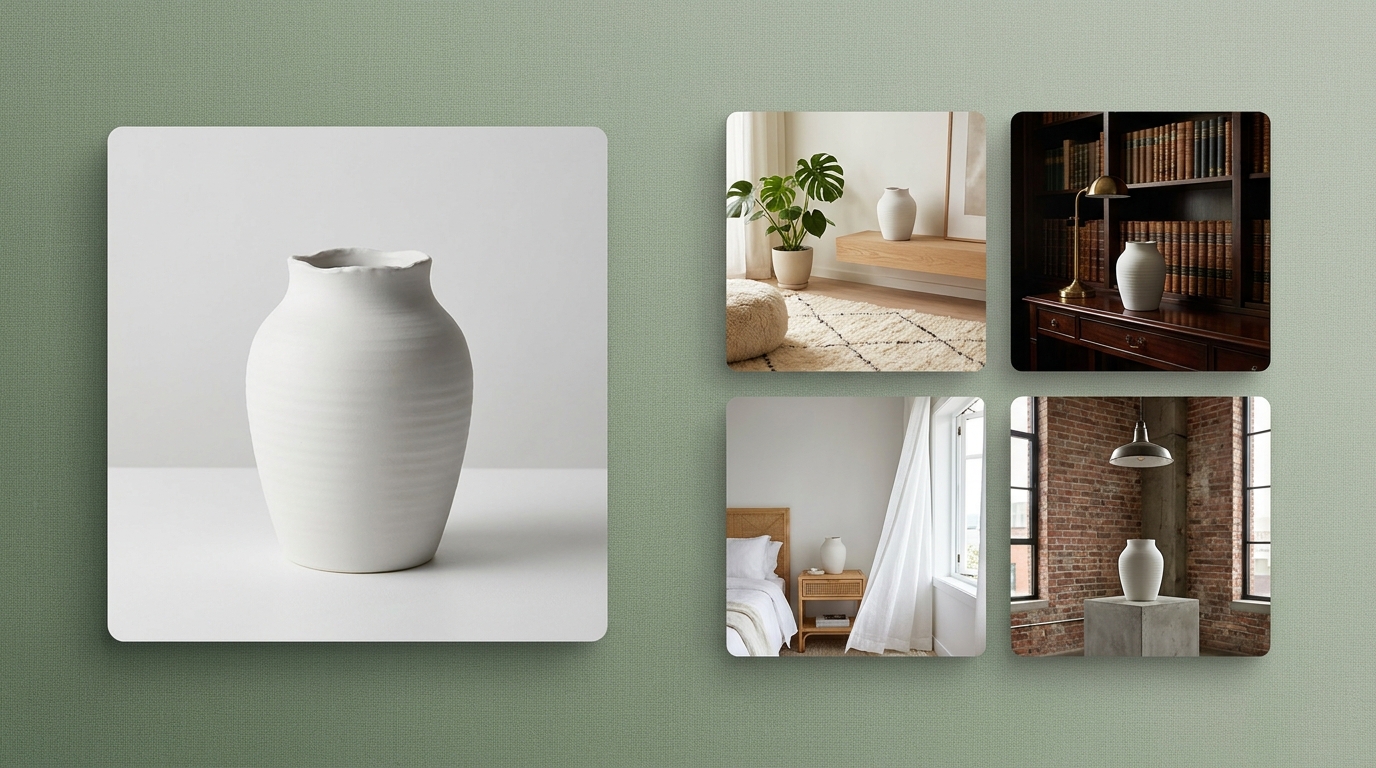
- Scene generation — AI creates a new background around your product. This could be a marble countertop, a lifestyle kitchen scene, an outdoor setting — whatever fits your brand.
The output is a high-resolution image that looks like it came from a professional photoshoot. The AI handles lighting, shadows, reflections, and color matching so the product looks natural in the generated scene.
If you want to understand the background removal step in more detail, we wrote a full guide on AI background removal.
What the Results Actually Look Like
Modern AI image generation produces photos with consistent lighting across the scene, accurate shadow placement beneath products, and faithful preservation of fine product details like texture and edge definition — quality markers that used to require a skilled photographer and retoucher to achieve. In some cases, the output looks even better than traditional studio work because the AI has been trained on millions of professional product shots.
What makes it work so well:
- Products with clear, defined edges (bottles, boxes, electronics, cosmetics) come out flawless
- You get multiple scene variations from a single source photo in seconds
- Lighting and styling stay perfectly consistent across your entire catalog with style presets
- Every standard e-commerce format and aspect ratio is supported out of the box
Even categories that used to be tricky for AI — reflective surfaces, jewelry, transparent packaging — have improved dramatically. Tools like Flyshot use the latest generation models that handle these cases with surprising accuracy.
AI Product Photography vs Traditional Photoshoots
This isn't an either/or decision. It's about knowing when each approach makes the most sense.
When Traditional Photography Still Has a Place
- Hero brand imagery — Your homepage banner, flagship campaign shots. When you need absolute creative control over every pixel, a photographer gives you that. (Though AI tools with steering chat are closing this gap.)
- Products worn by human models — AI generates incredible scenes and environments, but if your brand relies heavily on model photography, you'll want real shoots for those hero shots.
- Ultra-luxury positioning — If your brand identity depends on bespoke, editorial-quality imagery with a specific creative director's vision, traditional shoots deliver that.
When AI Photography Wins
- High SKU count — If you have 50+ products that all need lifestyle shots, traditional photography costs become absurd. AI scales linearly.
- Speed — New product launching next week? AI generates images in minutes, not days.
- Variation testing — Want to A/B test your product on a white background vs. a lifestyle scene vs. an outdoor setting? AI lets you generate all three from one photo.
- Social media content — You need a constant stream of fresh visuals. AI makes that sustainable.
- Budget constraints — A professional product shoot runs $200-500+ per product. AI costs a fraction of that.
For a deeper comparison of lifestyle vs. white background approaches, check out this breakdown.
Who's Using AI Product Photography?
It's not just small sellers trying to save money (though that's a big chunk). The use cases are broader than you'd think.
Shopify and Amazon sellers are the most obvious adopters — they need catalog images at scale, and AI lets them generate consistent lifestyle shots across hundreds of SKUs without booking a single studio session. Dropshippers who never physically handle their products rely on it heavily too, since they often only have manufacturer-supplied photos to work with. The fashion and beauty categories have seen especially strong adoption, where styled product imagery directly impacts conversion rates and brand perception.
Beyond individual sellers, marketing teams use AI product photography to create social media content without the overhead of booking shoots for every campaign. Product managers mock up lifestyle imagery for launch pages before the product even ships. And agencies are producing client deliverables faster by generating scene variations in minutes instead of coordinating multi-day shoots.
Basically, anyone who needs product images regularly and doesn't want to run a photoshoot every time.
How to Get Started with AI Product Photography
You don't need to understand the technology to use it. Here's the practical version:
- Take a decent photo of your product. Good natural lighting, clean background, sharp focus. Your phone is fine. Our phone photography guide covers the basics.
- Upload it to an AI tool. The tool handles background removal and scene generation.
- Pick your scene and aspect ratio. Want a 1:1 square for Instagram? A 4:5 portrait for your feed? A 16:9 banner for your website? Choose the format you need.
- Download and use. That's it.
Flyshot is built specifically for this workflow. You upload a product photo, it removes the background automatically, and then you generate styled lifestyle scenes in whatever aspect ratio you need — 1:1 for Instagram, 4:5 for feeds, 9:16 for Stories, and more.
You get 25 free credits when you sign up, which is enough to test it on a few products and see the quality for yourself. Try it in the studio or check pricing for the plans.
Is AI Product Photography Worth It?
If you're selling products online and you're still either:
- Using bare-bones photos with messy backgrounds, or
- Spending hundreds per product on professional shoots, or
- Spending hours in Photoshop manually editing backgrounds
...then yes, it's worth trying. The ROI math is straightforward. Better product images → higher click-through rates → more sales. And AI gets you those better images at a fraction of the time and cost.
The technology is already delivering results that rival traditional studio photography for the vast majority of e-commerce use cases. And it keeps getting better.
Start with your worst-performing product listing. Upload the photo, generate a lifestyle scene, swap it in, and see what happens to your conversion rate. That's the fastest way to know if it works for your products.
For a comprehensive walkthrough of AI photography techniques and best practices, our AI product photography guide covers everything in detail.