April 19, 2026
Beauty Product Photography: From Bathroom Counter to Editorial in Minutes
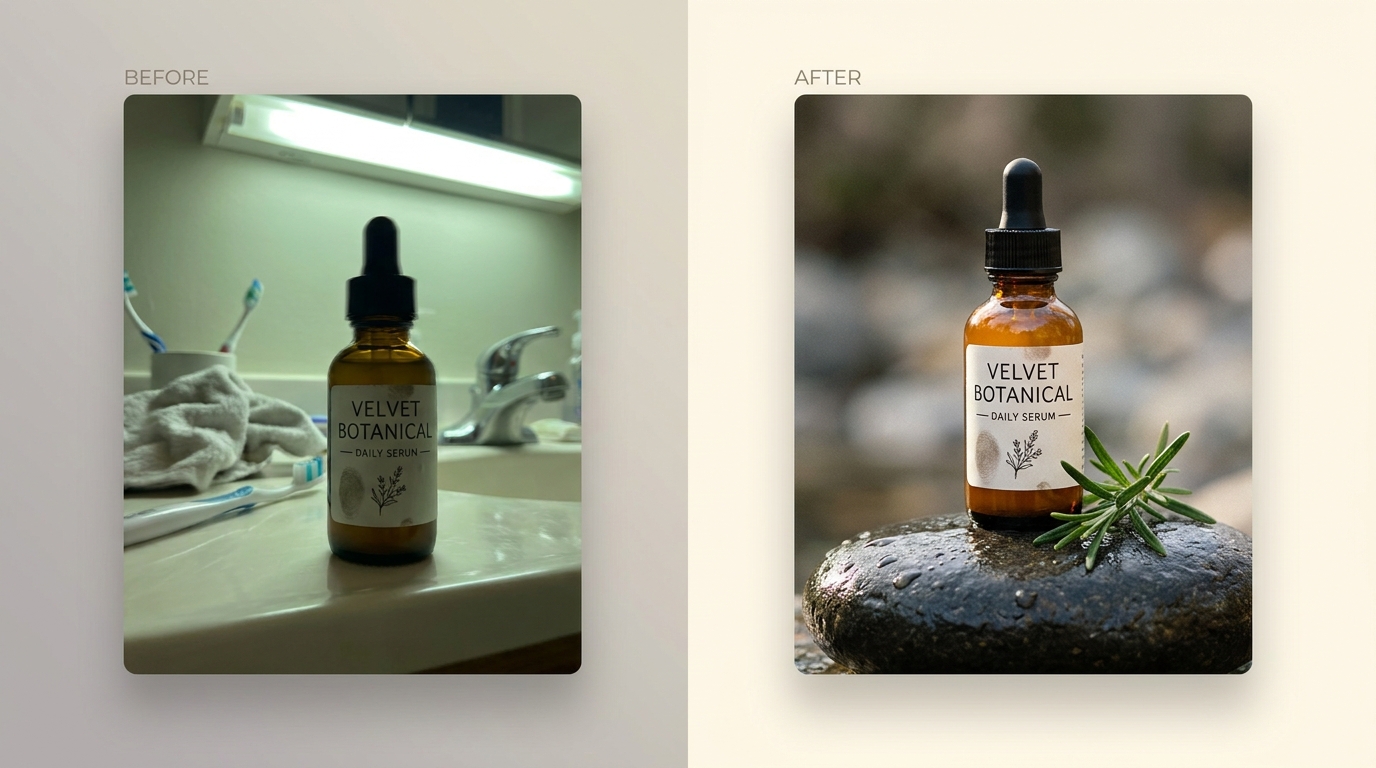
There's a specific kind of defeat that every indie beauty brand founder knows. You've spent months formulating your serum. The packaging is gorgeous — a frosted dropper bottle with a clean label you agonized over. You set it on your bathroom counter, open your phone camera, and take a photo. The result: your beautiful product surrounded by toothbrushes, a crumpled towel, and harsh fluorescent light that makes everything look like a hospital supply catalog. The product is the same. The photo makes it look like a completely different brand.
That gap — between what your product is and what your photos say it is — is the biggest obstacle most skincare sellers face when competing with brands that spend $50K on a single campaign shoot. Beauty is the one category where you cannot fake it. Shoppers scroll past a mediocre skincare product photo in milliseconds. They stop for the one that looks like it belongs in Vogue Beauty.
Why Beauty Photography Is Harder Than Almost Every Other Category
Beauty brand photography operates under different rules than most product categories. A coffee mug on a white background looks fine. A t-shirt laid flat on a clean surface works for an Amazon listing. But a skincare serum on a white background looks clinical at best and cheap at worst. Beauty products need context — the textures, surfaces, and botanical elements that communicate what the product is about before anyone reads a word of copy.
The physical challenges compound this. Glass bottles create reflections and hot spots that blow out your label. Clear bottles show every fingerprint. Matte packaging absorbs light and looks flat without careful directional lighting. Dropper pipettes catch light unpredictably, and metallic caps behave differently from every other surface in the frame.
Then there's the texture problem. A huge part of beauty product photography is communicating feel — the dewiness of a hydrating serum, the richness of a cream, the lightness of a gel. Professional photographers mist bottles with glycerin-water mixtures for that fresh look, or place water droplets with a syringe to suggest hydration. These details separate a photo that makes someone want to touch the product from one that just documents its existence.
The Anatomy of an Editorial Beauty Shot
Look at any beauty editorial that makes you pause. There's a consistent formula at work.
Surface and setting. The product sits on something intentional — a wet river stone, a slab of travertine, a sheet of handmade paper. Natural stone says "grounded, earthy, botanical." Marble says "luxury, clean, premium." The surface does as much brand storytelling as the label.
Botanical and organic props. Fresh rosemary, a sliced fig, dried lavender, scattered flower petals. These reference the product's ingredients or the sensory experience it promises. A vitamin C serum next to a halved orange. A rose hip oil beside dried rose buds. The props reinforce the product's value visually.
Light quality. Beauty photography almost always uses soft, diffused light — the kind you get from a large window with sheer curtains. Hard, direct light creates harsh shadows and unflattering reflections on glass. The best skincare product photos have a gentle, directional quality where light wraps around the bottle, creating a soft gradient from highlight to shadow.
Negative space. Editorial beauty shots breathe. Generous space around the product communicates confidence and luxury. Cramped compositions feel budget.
Practical Cosmetics Photography Tips
Even if you're planning to use AI for your final images, the quality of your source photo matters. Here's what makes the biggest difference when shooting beauty products at home.
Use window light, not overhead light. Position your product near a large window during the middle of the day when the light is bright but indirect. If direct sunlight hits the product, hang a white bedsheet over the window to diffuse it. This single change eliminates the harsh shadows and color casts that ruin amateur beauty photos.
Clean everything obsessively. Wipe down every bottle with a microfiber cloth immediately before shooting. For glass, use a lens cleaning cloth. Fingerprints and dust invisible to your eye will show up clearly in photos, especially on dark or transparent packaging.
Shoot against a simple, matte background. White poster board or linen fabric. The goal is to give background removal tools a clean edge to work with. Busy backgrounds with colors similar to your product make extraction harder.
Get the angle right. Most beauty products look best at roughly 15 to 30 degrees above straight-on — it shows the label while revealing the bottle's shape. Straight-on flattens; directly overhead hides the label.
Shoot at the highest resolution your camera allows. More pixels mean more flexibility. AI tools work better with higher-resolution inputs, and you'll want the option to crop without losing detail.
From Phone Photo to Editorial With AI
This is where the workflow shifts for indie beauty brands. The traditional path from a bathroom counter photo to an editorial image involves a studio, a photographer, a stylist, props, and a full day of production. The AI path is different.
You start with a clean product photo — even one taken with your phone. Background removal strips away whatever environment the product was in, isolating it cleanly. Then AI scene generation builds an entirely new world around your product — a full scene with surfaces, props, lighting, and shadows that respond to your product's shape, material, and color.
The difference is visible in the image at the top of this article. The same Velvet Botanical Daily Serum dropper bottle — in one version on a cluttered bathroom counter under fluorescent light, in the other placed on a wet river stone with fresh rosemary and a soft natural bokeh background. The bottle didn't change. The world around it did.
What makes this particularly powerful for beauty product photography is consistency. Style presets let you define an aesthetic — natural stone surfaces with botanical elements and warm directional light — and apply it to every SKU. Your cleanser, toner, serum, and moisturizer all live in the same visual world. Launch a new product six months from now and it slots right in without coordinating another shoot.
Making Your Beauty Brand Look Like It Belongs
A beautifully formulated serum with bathroom-counter photos will lose to a mediocre formula with editorial imagery. That's not fair, but it's how visual commerce works — especially in beauty, where the aesthetic is the brand promise.
The good news is that the gap between what indie brands can produce and what established brands put out has narrowed dramatically. You need a clean source photo, an understanding of what makes beauty photography work, and the right tools to build the visual world your products deserve.
Your formulation took months. Your packaging took weeks. Your photography shouldn't take more than an afternoon. Try Flyshot free and run your hero product through a few different scenes — you'll see the difference immediately.