April 18, 2026
How to Create Lookbook Photography Without Hiring Models or Booking a Shoot
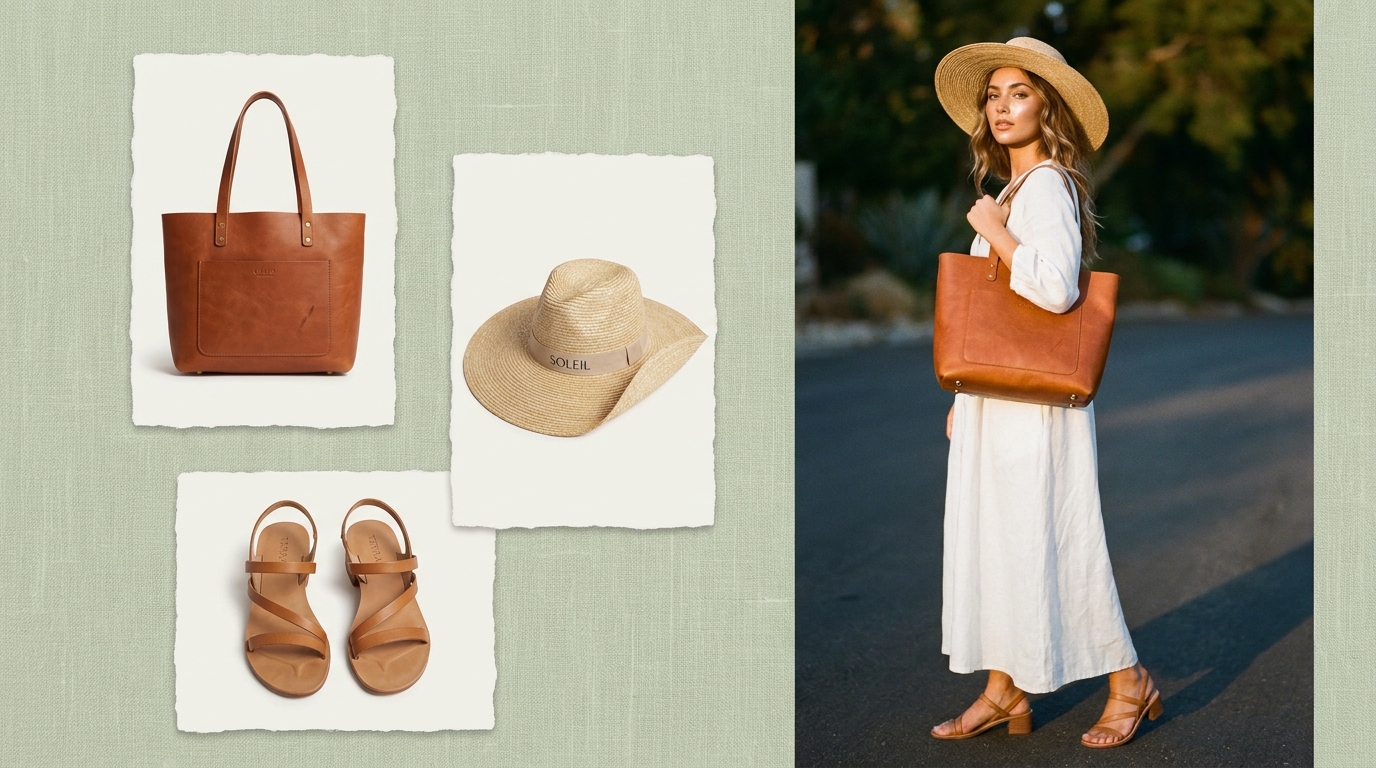
A lookbook is supposed to tell a story. Not just "here are our products" but "here's the life you step into when you wear them together." That leather tote slung over a shoulder, the straw hat catching golden-hour light, the sandals on sun-warmed stone — individually they're product shots, but styled together on a model, they become something else entirely. They become a mood, a season, a reason to buy all three instead of just one.
The problem is that creating styled lookbook photography has traditionally required the kind of budget and logistics that most small fashion brands don't have. And so the lookbook — one of the most powerful selling tools in fashion — stays out of reach for the brands that need it most.
What a Lookbook Actually Costs (and Why Most Brands Skip It)
A traditional lookbook shoot is a production. You need a model — or several. You need a photographer who understands fashion lighting. You need a location, whether that's a rented studio or an outdoor setting with permits and weather contingency plans. You need a stylist, a hair and makeup artist, and someone handling wardrobe changes between setups.
For a small accessories brand launching a spring collection of 15 pieces, a single day of lookbook shooting can run $3,000–8,000 depending on your city. A single day might yield enough usable shots for 4–6 styled looks. If you want to show those same products in different combinations — the hat with a different bag, the sandals with a different outfit — you're looking at additional shoot days or accepting that most of your catalog won't get the lookbook treatment.
The result is predictable. Most indie fashion brands skip the lookbook entirely. They photograph each product individually — flat lay or mannequin — upload the images, and hope that customers can imagine how the pieces work together. Some try to bridge the gap with flat-lay styling, arranging products on a surface in an outfit-like composition. It's better than nothing, but it doesn't communicate fit, proportion, or the way a bag actually sits on a shoulder. The whole point of on-model product photography is showing products in context on a human body, and flat lays can't do that.
Combining Individual Products Into Styled Scenes
Instead of booking a shoot to photograph products together on a model, you can now work in the opposite direction — start with individual product photos you already have and combine them into a cohesive on-model lookbook image using AI scene generation.
The workflow is straightforward. You photograph each product individually with clean, even lighting. A leather tote on a white surface. A straw sun hat shot from the front. A pair of sandals arranged neatly. These are the kinds of product shots most brands already have in their product catalog. Then, instead of hiring a model to physically wear all three items, you use Flyshot's on-model photography tools to generate a scene where a model wears the complete outfit in a setting that matches your brand's aesthetic.
The output is a single cohesive image — a model in a white linen dress wearing the straw hat, carrying the leather tote, sandals on her feet, standing in a golden-hour outdoor setting. The individual products are recognizable and accurate, but now they exist in relationship to each other and to a human body. That's the difference between a product page and a lookbook page.
Tools like Flyshot make this workflow accessible without design skills — upload your product shots, choose a scene style, and generate styled lookbook images directly.
Tips for Creating Cohesive Lookbook Imagery
Working with AI-generated lookbook photography is different from traditional shooting, and the brands getting the best results approach it thoughtfully.
Start with your strongest product shots. The quality of your input directly determines the quality of your output. Each individual product photo should have sharp focus, consistent lighting, and a clean background. If your tote bag photo has harsh shadows on one side and your hat was shot under warm tungsten light, the generated scene will struggle to make them look like they belong together. Consistency in your source photos is the biggest factor in whether the final lookbook image feels natural.
Think in outfits, not individual products. Before generating anything, plan your looks the way a stylist would. Which products complement each other in color, material, and vibe? A structured leather bag pairs naturally with leather sandals and a woven hat — the materials share a visual language. Mixing a neon athletic bag with delicate pearl earrings and suede boots would feel disjointed in a real lookbook, and it'll feel disjointed in a generated one too.
Match your scene to your brand identity. The background environment matters as much as the products. A boho accessories brand should generate outdoor scenes with natural textures — sun-bleached wood, warm stone, wild grasses. A minimalist leather goods brand should lean toward clean architectural settings or neutral studio environments. The scene should feel like a natural extension of your brand's visual language.
Generate variations for different channels. One advantage of this approach over traditional shoots is that you can create multiple versions of the same outfit in different settings. The same hat-bag-sandals combination can appear in a golden-hour outdoor scene for Instagram, a clean studio setting for your website, and a warm interior for an email campaign. In a traditional shoot, each setting change eats time and money. Here, it's just another generation.
Why Lookbooks Sell More Than Individual Product Shots
Styled outfit photography increases average order value almost mechanically. When a customer sees a bag, a hat, and sandals styled together in a scene they find aspirational, they don't just want the bag — they want the look. They add the hat. They add the sandals. The lookbook image does the cross-selling work that no "customers also bought" widget can replicate, answering the unspoken "what do I pair this with?" question visually instead of with a text suggestion.
From Product Shots to a Complete Lookbook
The traditional lookbook process — casting models, booking locations, coordinating stylists, shooting for days, retouching for weeks — made sense when it was the only option. But for small fashion and accessories brands, the choice used to be binary: spend thousands on a proper lookbook or don't have one at all.
That's no longer the case. If you have clean individual product photos — and most brands do, because you need them for listings anyway — you have the raw material for styled lookbook imagery. The gap between "I sell a leather tote, a straw hat, and sandals" and "I sell a curated summer look" is no longer a $5,000 photo shoot.
If your brand is missing that styled, editorial layer that makes customers want the whole outfit, try building a few lookbook scenes from your existing photos. Even one cohesive outfit image can shift how people shop your collection — from browsing individual items to adding the whole look to their cart.